Sultana Creek, Sultana Peak
Previous Names: Michelsen/Michelson Creek
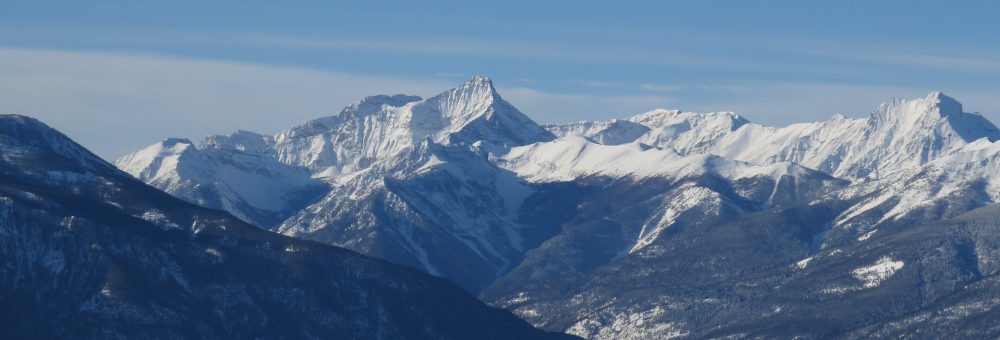
Sultana Creek gets its name from Sultana Peak, which was itself named after a short-lived group of mining claims, known as the Sultana Group, located in the early 1900s.
Previous Names: Michelsen/Michelson Creek
Sultana Creek gets its name from Sultana Peak, which was itself named after a short-lived group of mining claims, known as the Sultana Group, located in the early 1900s.
Extensive development work gave the Lead Queen a reputation for being, “unquestionably one of the best developed properties in the Division.”17
More shipments were made from the Isaac claim than many other better known mines in the Valley, totalling at least 250 tons over a period of about eight years … This record is surprising given that few people today have heard about the Isaac mine.
Other Names: Windermere Mountain, Morigeau Mountain
It is said that the first shipment of ore from the Windermere Valley was sent from the mountain to the smelter in Swansea, Wales. There is some truth to the story, however it’s also somewhat more complicated than that.
“Mr. Starke called the property [Delphine Mine] after me. I was in the habit of going to the property with him before the trails were even cut. I was about the first white woman to go to the Selkirks and my trips often occasioned surprise.”6 (Delphine Starke, 1918)
The original Jumbo claim never came to much, although those interested in the claim were definitely onto something. The claim is located just to the north of the Crown Granted claims for the Mineral King Mine, which became a large scale operation in the 1950s.
The Thunder Hill Mine was an enthusiastic venture by a Company that ultimately overextended itself in the development of a property that was, to put it simply, not very good.
Bugaboos / n / a nemesis; a real or imagined obstacle that cannot be overcome; something that always causes failure or bad luck.
Associated Names: Named after the Red Line group of mines at the head of the creek. The Red Line (1898-c.1902) was also known as the McDonald Mines (1902), the Ptarmigan Mines (1903-1920s), and Selkirk Ptarmigan Mines Ltd (1958-1964?)
“There is no doubt that the mine will never be reopened again, and there is also no doubt that a great deal more money was spent on the property than ever its showing of ore warranted.” (Report to the Minister of Mines, 1915)
The Bunyan mining claim was located on the shoulder of a bluff about 300 feet above the bench lands below, and in 1920 it was decided that the best way to access the ore was to blow off the shoulder with one massive blast and turn the mine into something more resembling an open quarry.
 In The Windermere